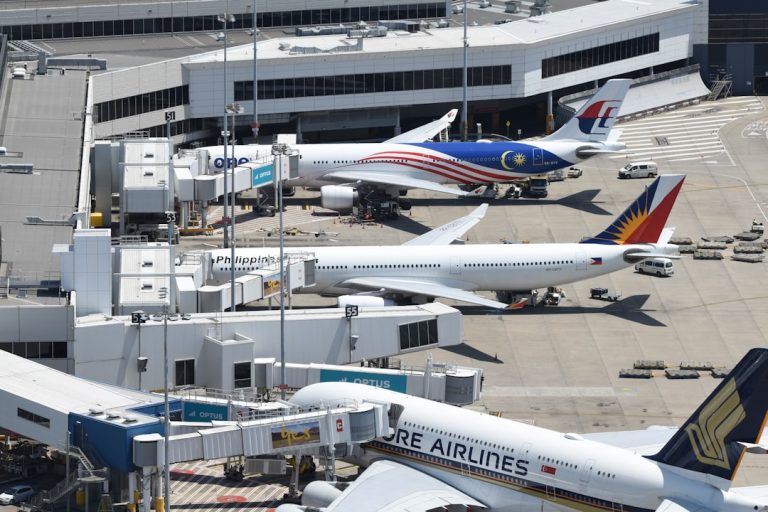
The Middle East, a vital hub for global aviation, is currently facing massive flight disruptions due to escalating conflicts involving America, Israel, and Iran. Airspace across several key nations – including Israel, Qatar, Syria, Iran, Iraq, Kuwait, and Bahrain – was abruptly closed, causing widespread chaos for hundreds of thousands of travelers.
Major airport hubs like Dubai, Abu Dhabi, and Doha, which typically manage around 90,000 passengers daily, were temporarily shut down. This led to the cancellation of over 1800 flights by prominent Middle Eastern airlines such as Emirates, Qatar Airways, and Etihad, leaving countless travelers stranded or diverted mid-journey.
The situation became even more serious with reported incidents. Dubai International Airport, one of the world’s busiest, saw four people injured. Tragically, Zayed International Airport in Abu Dhabi reported one fatality and seven injuries from a drone strike, and Kuwait International Airport also faced strikes. Even Dubai’s famous Burj Al Arab hotel suffered minor damage from drone debris, showing the broad impact of the attacks.
For anyone planning to travel through or over the region, the consequences are significant. Airlines are now forced to reroute flights, adding hours to journeys and increasing fuel consumption. This could quickly translate into higher ticket prices if the instability continues. While the exact duration of these disruptions remains uncertain, the ripple effect on global travel and the regional economy is undeniable.
Source: https://www.armidaleexpress.com.au/story/9186350/us-strikes-on-iran-spark-travel-chaos/